Published on 09/09/2020
Is Loreto Mexico Safe for Tourists? What Travelers Should Know

By the Team at Hotel Santa Fe Loreto | Loreto, Baja California Sur
Let's be honest, when most people hear "Mexico travel," safety is usually the first thing that pops into their head. And that's a fair question to ask. But here's what most travel headlines miss: Mexico is a big, diverse country, and not every destination looks the same. Every region has its own personality, its own rhythm, and yes, its own safety profile. Loreto, tucked along the turquoise shores of the Sea of Cortez in Baja California Sur, is living proof of that.
We get this question from guests almost every week: "Is Loreto safe?" And every time, our honest answer is the same — yes, Loreto is one of the safest and most welcoming destinations in all of Mexico, and genuinely one of the best-kept secrets in North America.
But we're not going to just tell you "it's safe, don't worry!" and leave it at that. You deserve real information, real context, and real tips so you can travel with confidence. So let's get into it.
What Makes Loreto Different from Other Mexican Destinations?
Loreto isn't Cancún. It isn't Los Cabos. It's not even close to the areas that sometimes make international news.
Loreto is a small historic town of approximately 20,000 residents, located on the eastern coast of the Baja California Sur peninsula. It is one of the oldest Spanish colonial settlements in the Californias, home to the first mission established in the region, and is surrounded by Loreto Bay National Park, part of a UNESCO-recognized area in the Sea of Cortez, which Jacques Cousteau famously called “the aquarium of the world.”
What does that mean for safety? It means Loreto has a tight-knit community, a deeply local identity, and an economy that depends almost entirely on tourism and fishing. The people here have a genuine stake in keeping their town welcoming, peaceful, and pristine.
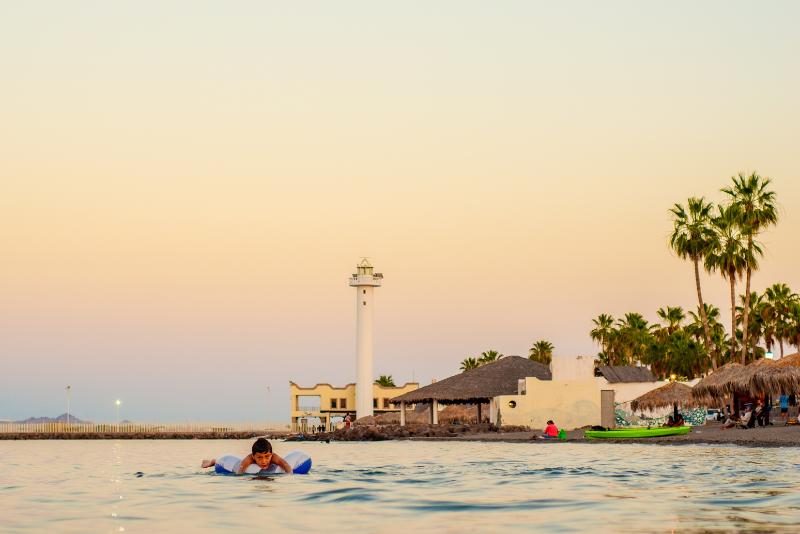
There are no sprawling urban tensions here. No overcrowded resort corridors. No party-district chaos. What you'll find instead is a sleepy malecón (waterfront promenade), a beautiful old mission church, family-run restaurants, and a pace of life that forces you to slow down and breathe.
What the Travel Advisories Actually Say About Loreto
This is important, so pay attention.
The U.S. State Department issues travel advisories by state, not by individual city. Baja California Sur, the state where Loreto is located, is currently listed as Level 2: Exercise Normal Precautions, the same advisory level as popular European destinations like France, Germany, and the United Kingdom.
To put that in context, Los Cabos and La Paz, also in Baja California Sur, fall under the same advisory. This is a very different picture than the Level 3 or Level 4 advisories that apply to certain states in mainland Mexico.
Canadian travelers will find similar guidance from the Government of Canada, which advises normal precautions for Baja California Sur.
The bottom line: major travel governments consistently treat Loreto and the broader Baja California Sur region as a low-risk destination suitable for regular tourism.
Real Talk: What Travelers Actually Experience in Loreto
We've hosted thousands of guests at Hotel Santa Fe Loreto over the years, and the most common thing people tell us when they arrive is some version of: "I can't believe how relaxed I feel here."
Here's what day-to-day life in Loreto actually looks like for a tourist:
Walking around town feels easy and natural. The Loreto malecón, the town plaza, the mission area, and the main streets are all very walkable, during the day and well into the evening. Families stroll, kids play soccer in the streets, and expats chat over coffee at open-air cafés. It has that rare quality of a place where you stop checking your watch and just... wander.
Interactions with locals are warm and genuine. Loreto has a strong expat community of Americans and Canadians who have chosen to live here full-time, many of them for decades. That alone tells you something. The locals are deeply used to welcoming international visitors and tend to be genuinely friendly rather than transactionally polite. People will give you restaurant recommendations you didn't ask for, help you find your way without being asked, and wave hello from their doorstep.
The town has a real neighborhood feel. This isn't a resort bubble. You're sharing the streets with fishermen heading to the dock at sunrise, grandmothers buying produce at the market, and kids walking home from school in the afternoon. That authenticity is exactly what makes Loreto so disarming, and it's also what makes travelers come back year after year.
The pace itself is part of the experience. Guests consistently tell us that within a few hours of arriving, they feel a shift. The tension of the trip, the planning, the worrying, the "is this going to be okay?", just dissolves. Loreto has a way of doing that to people.

Is It Safe to Drive to Loreto?
One of the most common questions we get is whether road tripping to Loreto is safe. The short answer is yes, and it's actually one of the great drives in North America. But let's walk through exactly what that trip looks like so you can plan it confidently.
Where does the drive start? Most travelers driving from the United States enter Mexico through Tijuana, just south of San Diego, California. From the border crossing, you pick up Mexico Federal Highway 1, also known as the Transpeninsular Highway, which runs the entire length of the Baja California Peninsula, from Tijuana all the way down to Cabo San Lucas at the southern tip.
Loreto sits roughly at the midpoint of the peninsula, on the eastern coast facing the Sea of Cortez. From the Tijuana border crossing, it's approximately 1,100 miles (about 1,770 km) to Loreto, a beautiful but long drive that most people comfortably split over 2 to 3 days, with overnight stops in towns like Ensenada, Guerrero Negro, or Mulegé along the way.
If you're coming from other parts of the U.S. — Arizona, Nevada, Texas — you'd cross at different border points and connect through the interior of Baja or take a ferry from the mainland. But the Tijuana–Mex 1 route is by far the most popular and well-established path.
What is the drive actually like? Think dramatic desert landscapes, mountain passes, long stretches of open highway, and occasional small towns where you can stop for fuel, food, and a cold agua fresca. It's remote in stretches, and that's exactly what makes it memorable. This is not a congested freeway drive. It's a genuine road trip through one of the most visually striking and undervisited corners of North America.
Here's what to keep in mind to do it well:
•Drive during daylight hours only. Not for security reasons, but because the highway has limited lighting in rural stretches and livestock can wander onto the road after dark. Plan your daily driving window accordingly.
•Fill up on gas whenever you can. Gas stations exist along the route but can be spread out in more remote sections. Don't wait until you're on empty.
•The Ángeles Verdes have your back. This is a government-run roadside assistance program, green trucks that patrol Highway 1 and offer free mechanical help to stranded travelers. A genuinely reassuring thing to know about.
•Get Mexican auto insurance before you cross. It's legally required for foreign-registered vehicles and is easy to purchase online in advance. It's also very affordable.
•Plan your overnight stops ahead of time. Ensenada (about 1.5 hours south of Tijuana) is a great first night. Guerrero Negro or San Ignacio make excellent second-night stops. From there, Loreto is an easy morning drive.
Many people who do this drive say it ends up being one of the most unexpected highlights of their entire trip. By the time you roll into Loreto, you've already earned the view.

Flying into Loreto: The Easiest and Safest Option
If the road trip isn't calling your name, flying straight into Loreto International Airport (LTO) is the simplest way to get here. The airport is small, easy to navigate, and sits just minutes from the town center, so within a short time of landing, you can already be sitting on the malecón with a cold drink in hand.
The good news is that Loreto has surprisingly well-connected air service for a town its size, with direct flight options from several U.S. and Canadian cities:
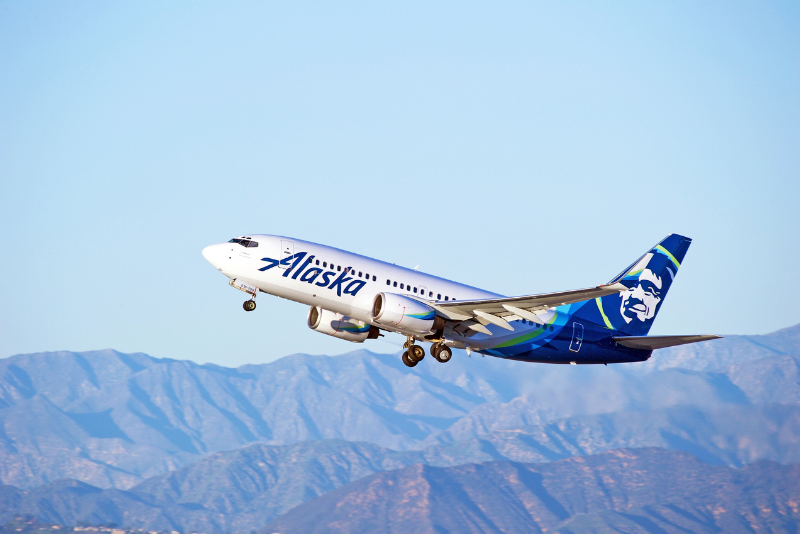
•Alaska Airlines flies direct from Los Angeles and San Francisco, making it a very easy getaway from Southern and Northern California
•American Airlines offers direct routes from Phoenix and Dallas, ideal for travelers coming from the Southwest and the Southeast
•WestJet connects Calgary directly to Loreto, making it one of the most accessible Mexican destinations for Canadian travelers
•Volaris flies from Tijuana — and for San Diego travelers, this is a particularly clever option: use the Cross Border Xpress pedestrian bridge that connects San Diego directly to Tijuana's airport, and you can board your Loreto flight without ever dealing with a U.S. major airport
No long layovers, no complicated connections, no road miles. Just a direct flight and you're here.
Health and Medical Safety in Loreto
Beyond physical security, smart travelers also think about health infrastructure. Here's the honest picture:
Loreto has basic medical facilities including a local clinic and pharmacy. For routine issues, a stomach bug, a minor injury, a sun-related illness, you're well covered.
For serious medical emergencies, the closest major hospital facilities are in La Paz (roughly 3.5 hours south) or Cabo San Lucas (about 5 hours south). This is standard for any small remote destination anywhere in the world.
Practical health tips for Loreto:
•Drink bottled or filtered water. As with most of Mexico, tap water is not reliably safe for drinking.
•Wear sunscreen religiously. The Baja sun is intense, and heat exhaustion is a real concern if you're spending time outdoors on the water.
•Purchase comprehensive travel health insurance before your trip that includes medical evacuation coverage, a smart move for any international travel.
•If you have any prescription medications, bring more than you think you'll need. While pharmacies in Loreto are stocked with basics, specialty medications may not be available.

Water Safety and Outdoor Adventure in Loreto
Loreto is an outdoor adventure destination. Kayaking, snorkeling, whale watching, scuba diving, sportfishing, and hiking are all major draws. And yes, you should know how to approach these activities safely.
The Sea of Cortez is generally calm and beautiful, but ocean conditions can change. Always go out with a licensed local guide or tour operator for water activities, not only for safety, but because local guides know the best spots, the best timing, and how to read the water.
Whale watching in Loreto (typically January through March) involves going out on small pangas (open boats) with experienced captains who know these waters deeply. Follow their instructions, wear your life jacket, and you're in good hands.
Hiking in the Sierra de la Giganta mountains surrounding Loreto offers stunning views but can be exposed and hot. Go with a guide, bring ample water, start early in the morning, and tell someone your plans.
The outdoor risks in Loreto are the same kinds of risks you'd weigh anywhere you're adventuring in nature — sun, water, heat, wildlife — not security concerns.

Smart Safety Tips for Visiting Loreto (That Apply Anywhere)
You don't need to be paranoid in Loreto, but a few commonsense habits go a long way:
Stay aware of your surroundings, especially in unfamiliar areas. This is basic travel wisdom anywhere in the world.
Keep a photocopy of your passport in your hotel room and carry a copy (not the original) with you when exploring.
Use ATMs during daylight hours, preferably at a bank or inside a business rather than at a standalone outdoor machine.
Don't flash expensive gear. Expensive cameras, jewelry, and phones draw attention everywhere. Keep it low-key.
Trust your gut. If something feels off, it probably is. This applies in Tokyo as much as in Loreto.
Use reputable transportation. Your hotel can arrange trustworthy taxi services and tours. We're always happy to help guests with this at Hotel Santa Fe Loreto.
Register your trip with your home country's travel registry. The U.S. Smart Traveler Enrollment Program (STEP) and Canada's Registration of Canadians Abroad are free services that help your government reach you in an emergency.

What Loreto Offers That Makes It Worth Coming For
But talking about safety without talking about why Loreto is worth the trip would be missing the whole point.
Loreto Bay and the Sea of Cortez offer some of the most biodiverse marine environments on the planet. Blue whales, whale sharks, sea lions, dolphins, and hundreds of fish species call these waters home.
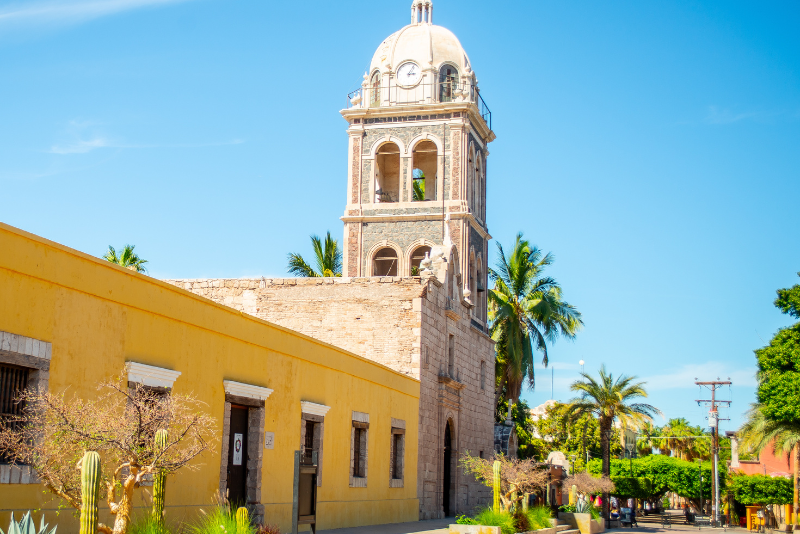
The historic Mission of Loreto (Misión de Nuestra Señora de Loreto), founded in 1697, stands as a beautifully preserved piece of living history right in the town center.
The food scene, while small, is deeply satisfying — fresh seafood caught that morning, traditional Baja cuisine, and family recipes passed down for generations.
The pace is the real gift. Loreto moves slowly by design. No traffic, no crowds, no frenetic resort energy. Just warm weather, clear water, and genuine hospitality.
And of course, Hotel Santa Fe Loreto sits right in the heart of all of it — offering a welcoming home base with staff who treat every guest like family and know this town inside and out.
Frequently Asked Questions About Safety in Loreto, Mexico
Is Loreto safe right now?
Yes. Loreto has long been considered one of Mexico’s most tranquil and welcoming destinations. As with any international travel, we recommend reviewing your country’s official travel advisories for the latest updates before departure.
Is Loreto, Mexico safe for solo travelers?
Yes. Loreto is considered one of the safest destinations in Mexico for solo travelers, including solo female travelers. The town is small and walkable, the community is tight-knit, and the general atmosphere is relaxed and friendly. As with solo travel anywhere, basic awareness and common sense go a long way. Stay in reputable accommodations (like Hotel Santa Fe Loreto!), let someone know your plans, and you'll find Loreto to be a genuinely wonderful solo travel destination.
Is Loreto safe for families with children?
Absolutely. Loreto is actually an ideal family destination. The beaches are calm, the activities are kid-friendly (whale watching, kayaking, snorkeling), and the town has a neighborhood feel that makes parents feel comfortable.
What is the U.S. State Department travel advisory level for Loreto?
Loreto falls within Baja California Sur, which is currently rated Level 2: Exercise Normal Precautions, the same rating given to many Western European countries. This is one of the more favorable advisory levels issued and reflects a low-risk environment for tourism.
Are there areas of Loreto I should avoid?
Loreto is a small, relatively uniform town without the kinds of clearly delineated "bad neighborhoods" that larger cities might have. The tourist areas, the malecón, the mission, the main shopping streets, and the hotel corridor, are all comfortable and well-frequented. As in any destination, isolated areas at night warrant basic caution.
Is the water safe to drink in Loreto?
No, don't drink the tap water. Stick to bottled or purified water, which is widely available and inexpensive. Most restaurants use purified water for cooking and ice. When in doubt, ask.
Is it safe to eat street food in Loreto?
Yes, with a little discretion. Loreto's food scene is relatively small, and most eateries, including street-side vendors, are accustomed to serving tourists. Look for busy spots with high turnover (a sign of fresh food), and your taco experience will be one of the best of your trip.
Do I need travel insurance for Loreto?
We strongly recommend it for any international travel. Medical facilities in Loreto handle routine issues well, but for serious emergencies, you'd need transport to a larger city. Travel insurance with medical evacuation coverage gives you peace of mind and is usually very affordable.
Is it safe to drive to Loreto from the U.S. or Tijuana?
Yes, but plan the drive carefully. Drive during daylight only, fill up on gas whenever you can, carry Mexican auto insurance, and make a flexible itinerary with known overnight stops. The Baja Peninsula road trip is an incredible experience when done thoughtfully.
What's the best time of year to visit Loreto?
October through April is considered the prime season, with warm, sunny days and comfortable temperatures ranging from the mid-60s to the mid-80s Fahrenheit. January through March also brings the added bonus of blue and gray whale season in the nearby lagoons. The summer months (June–September) are hot and humid, with occasional tropical storms, though the town remains peaceful year-round.
Is Loreto overcrowded with tourists?
Not at all, and that's one of its biggest appeals. Loreto has intentionally limited large-scale resort development, which means you experience it more like a real Mexican town than a manufactured tourist zone. Even during peak season, it feels uncrowded and authentic.
Is Loreto safe during hurricane season?
Hurricane season in Baja California Sur runs from June through November. While storms are not frequent, travelers should monitor forecasts and consider travel insurance during these months.
Is downtown Loreto safe?
Yes. Downtown Loreto is walkable, friendly, and filled with restaurants, cafés, and small shops. It’s one of the town’s highlights.
Should You Visit Loreto?
If you've been on the fence about Loreto because of vague worries about safety in Mexico, everything you've read here is the real picture, straight from people who live and work in this town every day.
Loreto is genuinely, measurably one of the safest and most rewarding destinations in Mexico. It has the natural beauty of Baja, the warmth of a real community, the history of the oldest mission in the Californias, and the marine biodiversity of a UNESCO-protected sea. And it doesn't have the overcrowding, the tourist-trap pricing, or the security concerns that affect other more high-profile destinations.
People who visit Loreto don't just leave happy, they start planning how to come back.
We'd love to be your home base when you do.
 The arrival of the Blue Giant to the waters of the Sea of Cortez
 The blue whale in Loreto, BCS
 Loreto 21k Half Marathon


Oliver Heldt

Linda L

Mike B

Goyotraveler
R0n69

Jassyho

Coastal682943

Freddyloan

Malu Yunez